
Customers see thousands of advertisements every day. They scroll through social media feeds filled with promotions, receive marketing emails from dozens of companies and encounter brands competing for attention across television, websites, mobile applications and physical retail environments.
In this environment, many businesses assume the solution is simple: become louder.
Spend more on advertising. Produce more content. Publish more posts. Launch more campaigns.
Yet some of the fastest-growing businesses are not necessarily the loudest brands in the market.
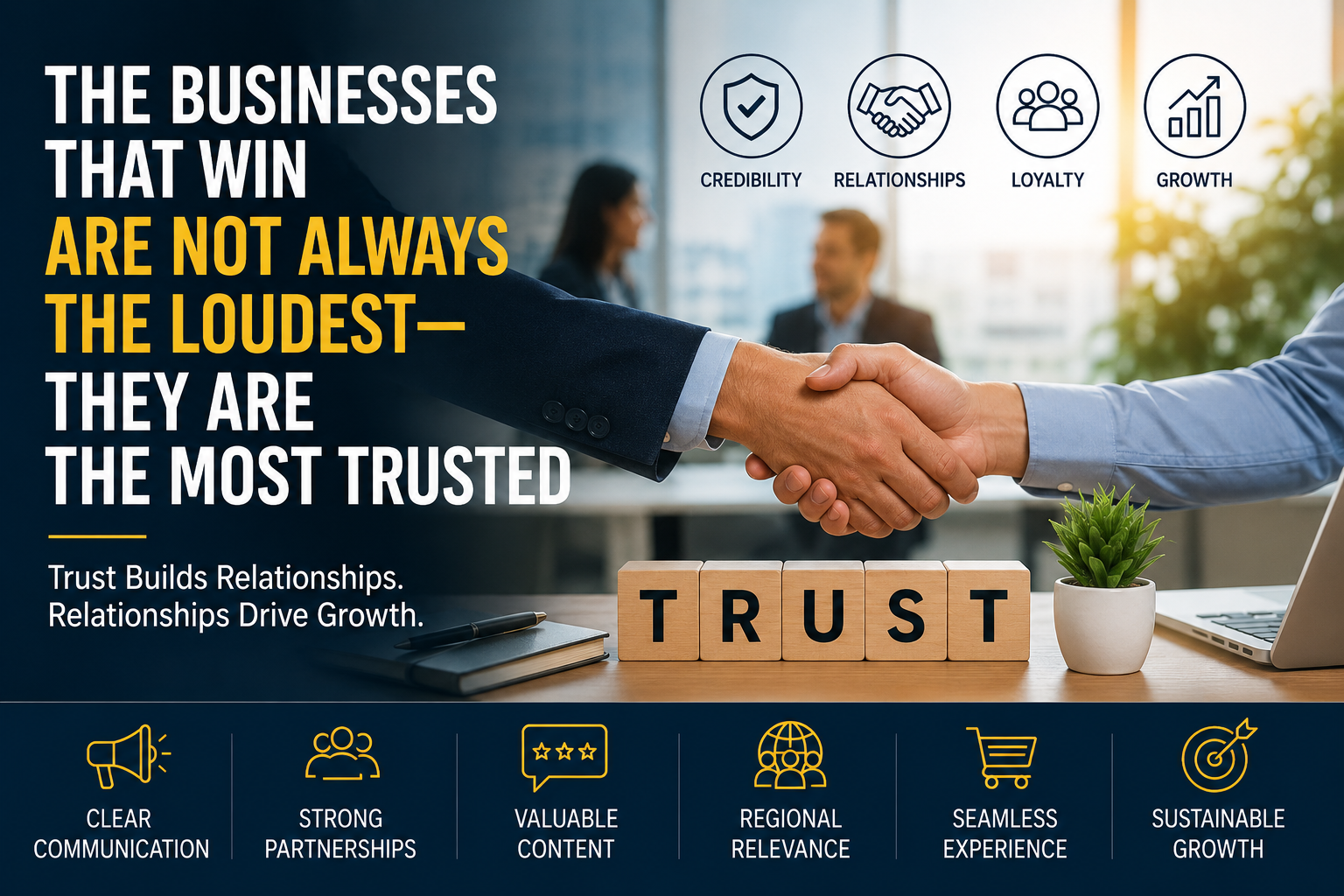
They are the brands people trust.
Trust changes the way customers make decisions. It reduces hesitation, shortens buying cycles and increases loyalty. A trusted brand does not need to convince customers from the beginning every time. Its reputation becomes part of the sales process.
This is why long-term growth often depends less on visibility alone and more on building confidence across every customer interaction.
Customers Judge Businesses Long Before They Buy
Most purchasing decisions begin before the customer ever speaks with a sales representative.
People research online. They compare alternatives. They examine websites, reviews, social-media profiles and product information. They observe how a business presents itself.
Every interaction contributes to perception.
If the website feels outdated, customers may question professionalism. If messaging appears inconsistent, people may wonder whether the company understands its own value proposition. If communication lacks clarity, uncertainty increases.
Strong businesses intentionally manage these first impressions through structured brand communication and positioning.
Positioning is not simply about creating a slogan.
It helps customers understand who the company serves, what problems it solves and why it deserves attention. Businesses that communicate clearly often earn trust faster because people immediately understand what makes them different.
When customers understand a business, they are more likely to remember it.
And when they remember it, they are more likely to choose it.
Relationships Still Matter in a Digital World
Digital channels have transformed marketing, but relationships continue to drive business growth.
This is particularly true in industries involving partnerships, distribution networks, enterprise sales, investments and high-value purchasing decisions.
People prefer doing business with organizations they know and understand.
Events remain one of the most effective ways to build those relationships because they create opportunities for direct interaction. Unlike digital advertisements, events allow conversations, demonstrations and personal engagement.
A well-organized dealer meet event helps companies strengthen relationships with distributors, retailers and channel partners who play a critical role in market expansion.
Dealers often serve as the bridge between brands and customers.
When those relationships are strong, businesses gain access to better feedback, stronger market intelligence and greater confidence throughout the distribution network.
Growth accelerates when partners believe in the brand’s future.
Customers Learn Through Stories
Information is important.
Stories are memorable.
Businesses often communicate features, specifications and technical details, but customers frequently make decisions based on understanding outcomes rather than processes.
This is why storytelling remains one of the most powerful communication tools available.
Video content is especially effective because it combines visual information with emotion and narrative structure.
A strong brand film editing service can help businesses communicate purpose, values and customer impact in a format that feels engaging rather than promotional.
People remember stories because stories create context.
Instead of simply learning what a company does, audiences understand why the company exists and how it creates value.
That deeper understanding strengthens trust.
Visualization Creates Confidence
Some products are easy to explain.
Others require customers to imagine something that does not yet exist.
Real-estate projects, industrial facilities, hospitality developments and infrastructure concepts often face this challenge.
People may understand the idea intellectually but still struggle to visualize the final outcome.
This uncertainty can delay decisions.
A high-quality 3D architectural rendering service helps businesses reduce that uncertainty by transforming concepts into visual experiences.
Instead of asking customers or investors to imagine a future project, the company can show it.
Visualization improves communication because people process images faster than complex descriptions. It also increases confidence because stakeholders can evaluate opportunities more clearly.
When uncertainty decreases, decisions become easier.
Communities Reward Meaningful Participation
Today’s customers pay attention to how organizations behave beyond their commercial activities.
Businesses that contribute positively to society often build stronger emotional connections with their audiences.
This does not mean every company must become a charity.
It means organizations should recognize that communities notice meaningful action.
Programs focused on rural development initiatives illustrate how long-term impact can create trust, goodwill and stronger community relationships.
For businesses, community involvement demonstrates commitment.
People want to support organizations that contribute value beyond transactions. Whether through education, sustainability, employment, skill development or local partnerships, positive engagement helps brands become more than suppliers.
They become participants in community growth.
Regional Credibility Matters
Many businesses think nationally before they think locally.
Yet customers often make decisions based on trusted regional information sources.
People consume local news, regional entertainment and language-specific content because it feels more relevant to their lives.
A business entering new markets should understand where local trust already exists.
For brands targeting Telugu-speaking audiences, a focused TV9 Telugu advertising strategy can help establish visibility within a trusted regional media environment.
Regional credibility creates familiarity.
And familiarity often becomes the first step toward customer confidence.
Entertainment Creates Repetition
Trust develops through repeated exposure.
People rarely buy from a company after seeing it once.
They encounter the brand repeatedly through multiple channels before deciding to engage.
Entertainment platforms play an important role in this process because audiences spend significant time with them.
A targeted Zee Marathi advertising campaign allows businesses to appear consistently within content environments that families engage with regularly.
Over time, repetition strengthens recall.
The customer may not remember a specific advertisement.
But they remember the brand.
And remembered brands enjoy a significant advantage when purchase decisions occur.
Market Expansion Requires Cultural Understanding
Expansion is not simply about geography.
It is about understanding people.
Every market has unique expectations, communication styles and purchasing behaviours. Businesses that ignore these differences often struggle despite strong products.
Companies entering Gujarat, for example, benefit from understanding local preferences, media habits and regional consumption patterns.
A strategic ABP Asmita advertising approach can help businesses connect with Gujarati audiences through familiar regional channels.
The goal is not merely translation.
It is relevance.
Customers respond more positively when communication feels naturally connected to their environment.
Thought Leadership Builds Authority
Attention creates awareness.
Authority creates influence.
Businesses that consistently share useful insights often become trusted voices within their industries.
Customers, partners and investors naturally gravitate toward organizations that demonstrate expertise.
A structured thought leadership media strategy helps businesses contribute valuable perspectives to industry conversations rather than simply promoting products.
This approach strengthens credibility because it positions the company as a source of knowledge rather than just a seller.
People trust experts.
And trusted experts often become preferred providers.
Audience Understanding Improves Efficiency
Marketing budgets are finite.
Businesses cannot afford to communicate with everyone equally.
Success depends on identifying the audiences most likely to engage, convert and remain loyal.
This requires understanding demographics, behaviours, interests and media consumption habits.
A focused Hindi media audience strategy can help brands allocate resources more effectively by reaching relevant customer groups rather than pursuing broad, inefficient exposure.
The right audience often matters more than the largest audience.
Precision improves efficiency.
Efficiency improves profitability.
Language Creates Connection
Language influences emotional response.
People naturally feel more comfortable when information is presented in familiar forms.
This is one reason regional-language communication continues to grow in importance across India.
Businesses targeting households in Maharashtra often benefit from communication strategies tailored to local culture and language preferences.
A dedicated Star Pravah advertising strategy helps brands connect with Marathi-speaking audiences through highly relevant entertainment environments.
When communication feels natural, trust develops more quickly.
And trust remains one of the most valuable assets a business can build.
Commerce Execution Determines Results
Marketing creates demand.
Commerce captures demand.
Businesses sometimes focus heavily on awareness while underestimating the importance of the final purchasing experience.
Customers expect convenience.
They want accurate product information, reliable availability, intuitive ordering processes and clear value propositions.
For food and consumer brands, a strong Instamart growth strategy can help transform awareness into measurable sales by improving marketplace performance and purchase readiness.
The buying experience should feel effortless.
When it does, customer satisfaction increases and repeat purchases become more likely.
Final Thoughts
The brands that succeed over the long term are rarely those that rely on attention alone.
They build trust.
They communicate clearly. They educate customers. They strengthen partnerships. They invest in community relationships. They adapt to regional audiences. They create useful content. They improve buying experiences.
Every one of these actions reduces uncertainty.
And reducing uncertainty is one of the most effective ways to drive business growth.
Customers reward confidence.
Partners reward reliability.
Markets reward consistency.
The businesses that understand this principle often discover that sustainable growth becomes much easier to achieve.
Not because they became louder.
But because they became trusted.